I’ve always been a fan of pick-and-shovel plays — especially in emerging technologies. Picking winners as the dynamics of the industry are constantly shifting is incredibly difficult. But if investors can identify the technology that any new technology can’t be built without, they’ve found a way to de-risk a potentially volatile investment while still cashing in on a new industry’s upside.
The early days of the internet were filled with companies that most people don’t remember anymore. AltaVista, Lycos and Excite were all popular search engines before Google took over the universe. Juno was actually a popular email provider. And most “experts” thought AOL would rule the universe.
Even Amazon wasn’t a sure bet to dominate the world. But the one thing the internet couldn’t work without was networking equipment. So Cisco investors cashed in. From a split-adjusted IPO price of $0.06 to a dot-com high of $80.06, Cisco did well for early internet investors.
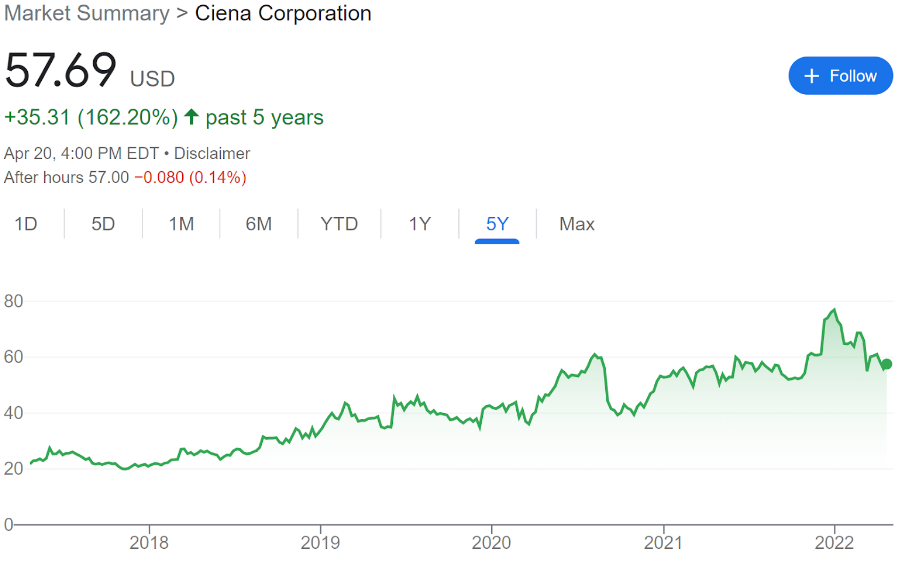
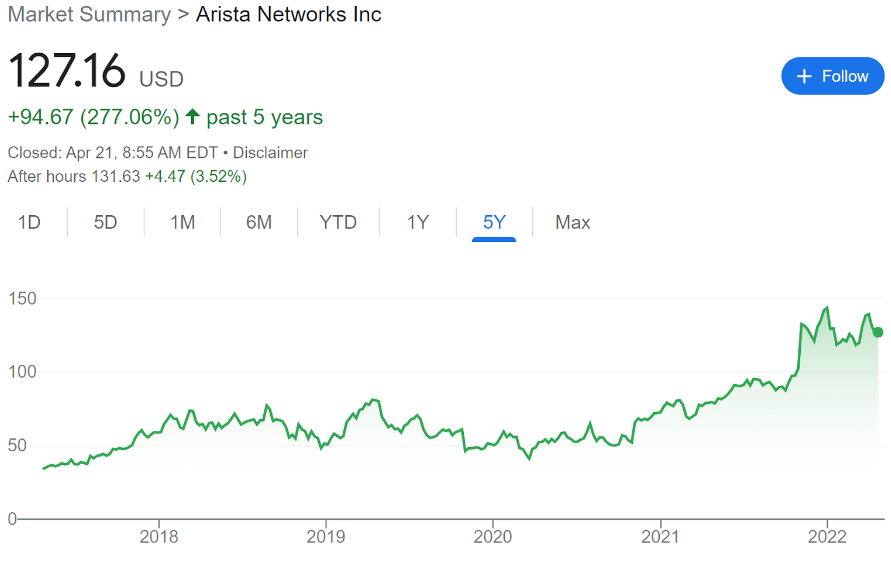
Successful pick-and-shovel plays of a more recent vintage include 5G superstars Ciena (fiber optics) and Arista Networks (data infrastructure). Just check out their five-year charts.
Crypto’s quasi pick-and-shovel play, NVIDIA (which supplies a lot of the graphics cards used in bitcoin mining), also has a strong five-year chart.
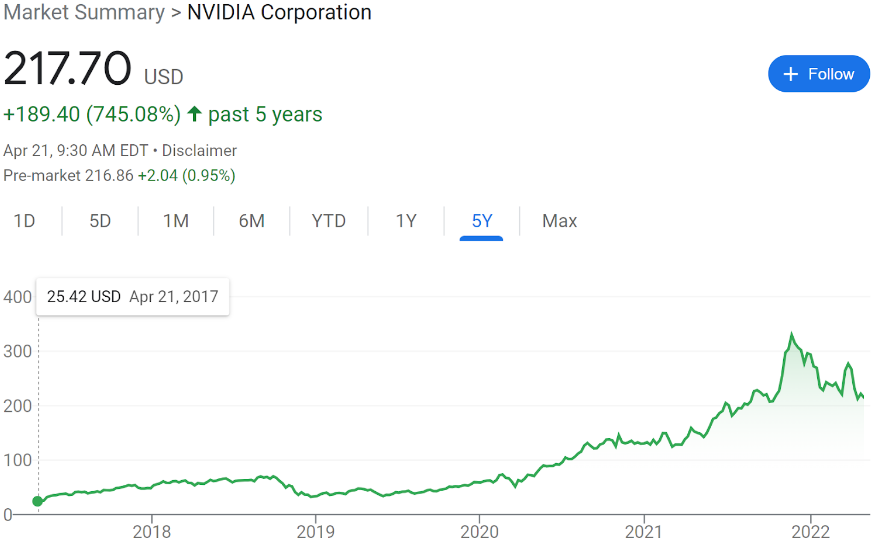
I call NVIDIA crypto’s quasi pick-and-shovel play because NVIDIA is a massive semiconductor company that does significantly more than provide graphics cards for crypto mining.
And that’s why I’m so interested in Stargate Finance, the coin I’m recommending to you today.
Stargate Finance is an interoperability blockchain project. Interoperability blockchain projects are the crypto equivalent of pick-and-shovel plays. They allow assets and data to flow between different crypto projects and networks.
The emergence of interoperability projects in the nascent days of crypto is a critical development for the future of decentralized everything.
To understand how important interoperability is, consider something as “simple” as medical records. When I fractured my ankle a few weeks ago, I had to go get X-rays at a radiology clinic. After the radiologist read my X-rays (and gave me the bad news), the clinic gave me a CD with my images on them.
Think about that for a minute. In 2022, we’re still giving patients CDs with their medical images. That’s because we don’t have interoperable medical systems to share data and images. Medical systems don’t talk to each other or can’t work with each other. So we’re stuck running CDs all over town on broken limbs.
When crypto started, different blockchain networks couldn’t talk to each other. Which meant you could execute a contract on the Ethereum network OR the bitcoin network. But not on both (for the same contract) — or at least not without a lot of work.
Interoperability chains fix this problem. They allow different blockchain technologies to communicate with each other and move assets or data from one chain to another.
We already have one interoperability chain in our portfolio. Cosmos has done extremely well since its launch. Stargate has the potential to follow a similar path.
Stargate is an interoperability project that’s focusing on decentralized finance. And its approach to interoperability is novel. Unlike “bridge” solutions, Stargate can guarantee finality, offer a universal liquidity pool and deliver native assets on the destination chain. Most bridge solutions today have to create a synthetic version of the final asset to get two chains to work together.
If that sounds really complex, don’t worry about it. The most important thing you need to know is that Stargate is solving a significant problem with potentially breakthrough technology. If you want to learn more about how Stargate works, click here.
Just as important as Stargate’s technology is the project’s origin. Stargate was created by LayerZero, a startup backed by Andreessen Horowitz, Sequoia Capital and other heavy hitters. LayerZero just raised $135 million at a $1 billion valuation. It has the leadership and funding to build this out. And more importantly, the market seems to like it.
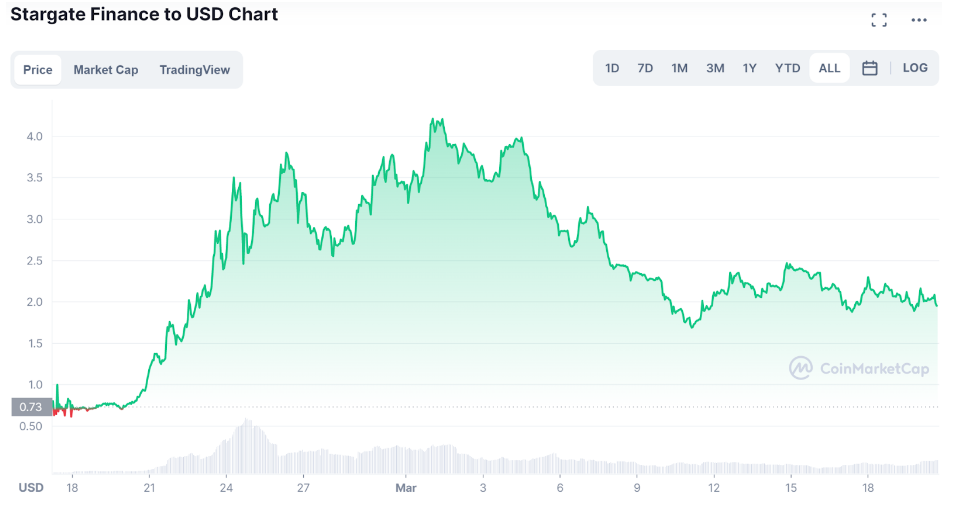
Stargate tokens (STG) first went on sale on March 17 (via an auction). And crypto investment firm Alameda Research bought up almost the entire allocation. That’s an incredible response for a brand-new token.
The good news is the STG price has dropped since its initial surge. As I write this, STG is trading for around $1.94. So crypto investors have a rare opportunity to invest in a promising coin during its nascent stages.
If you live outside of the U.S., trading STG should be pretty straightforward. Just use the FTX exchange. If you’re an American crypto investor, you’ll have to work a little harder to trade STG.
First, you’ll have to acquire Tether (USDT). Then you’ll have to transfer USDT to your Kucoin account. Once you have USDT on Kucoin, you can start trading STG. And as always, make sure you follow all the laws and regulations in your location regarding crypto.
Remember, investing in crypto is risky. Don’t invest any money you can’t afford to lose. That said, I believe STG offers an attractive risk-reward ratio. And it’s a rare opportunity to invest in a crypto pick-and-shovel play so close to its launch.